
Weak ground can cause big trouble before a building ever goes up. Soil can look solid on top while hiding soft, wet, or uneven areas below. Heavy equipment often exposes those weak spots once work begins.
Cement stabilization gives crews a way to improve problem soil instead of working around it. Griffin Contracting has the equipment and field experience needed to prepare difficult sites for the work ahead. Hiring skilled concrete contractors in Savannah, GA, can help create a stronger foundation for slabs, roads, parking areas, and other heavy construction projects.
Knowing what is happening below the surface helps you avoid costly surprises later.
Here are the site problems cement stabilization helps correct before building starts.
Key Takeaways
- Weak soil can look fine until heavy equipment starts putting it under real pressure.
- Moisture, clay, and uneven ground can make it harder to build a stable base.
- Cement stabilization helps turn problem soil into stronger ground before construction moves forward.
Soil That Pumps Under Heavy Equipment
Soft ground can start shifting the moment heavy equipment rolls across it. Trucks and loaders may press the soil down, only for it to push back up nearby. That movement is a clear sign the site is not ready to handle steady construction traffic.
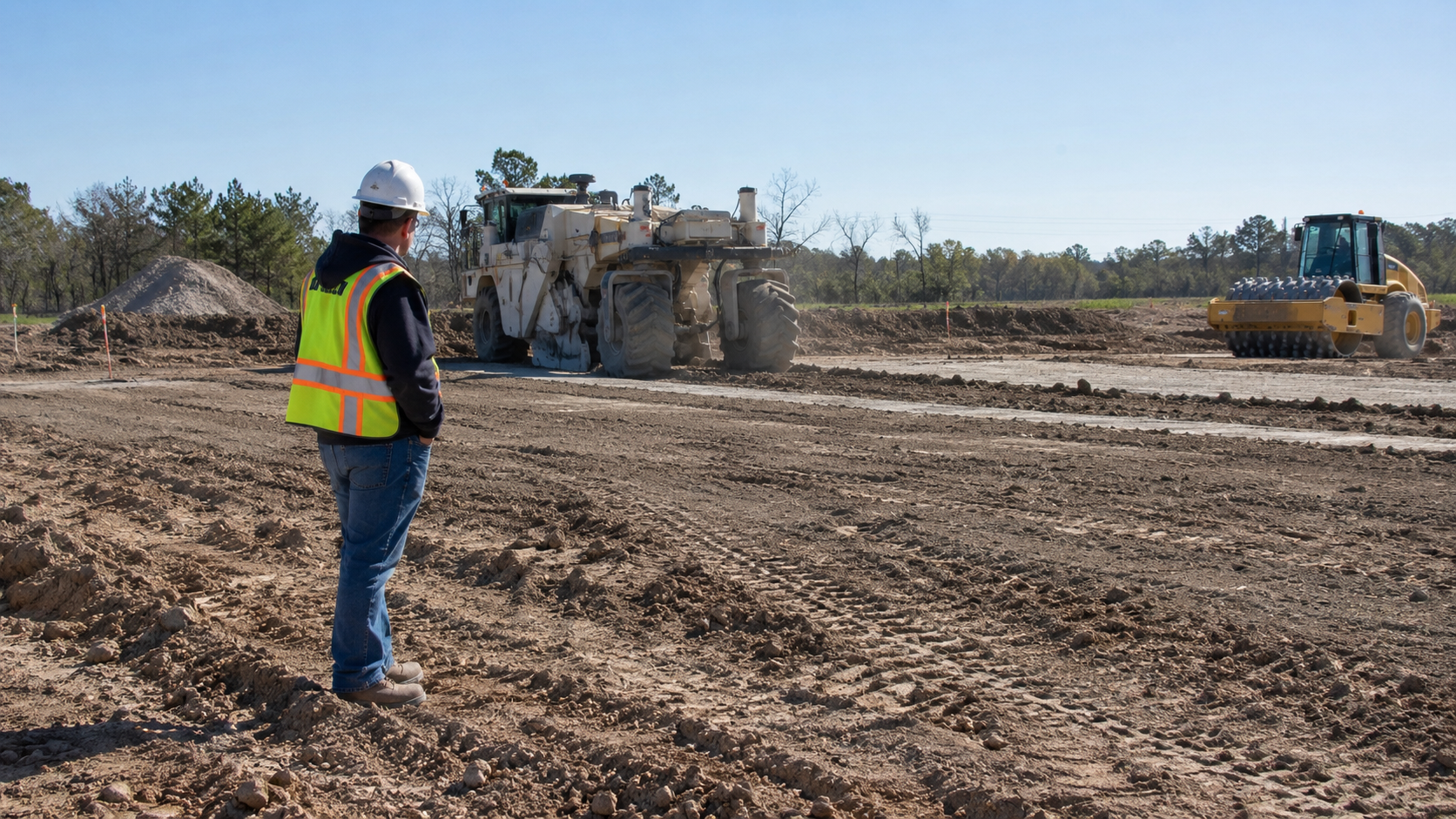
Cement stabilization can help stiffen those weak areas before the job moves forward. Firmer soil gives crews a more dependable surface for moving equipment and setting up the next phase of work. A better-functioning platform can also make the site easier to manage as construction intensifies.
Clay That Changes With Moisture
Clay soil can act very differently after a stretch of rain or dry weather. It may swell when wet, then pull back as it loses moisture. That constant change can make the ground less reliable under slabs, pavement, and other heavy work.
Cement stabilization can help limit how much the soil moves as moisture levels change. Mixing cement into the clay creates a firmer base that holds its shape better over time. More stable ground gives the project a better chance to stay supported as conditions shift.
Uneven Strength Across the Site
A jobsite can feel solid in one spot and weak just a few feet away. That uneven support can become a problem when a slab, road, or parking area stretches across both conditions. Different soil strength can make the finished surface harder to support evenly.
Cement stabilization can help bring those weak areas closer to the strength of the surrounding ground. Crews can treat the soil so the base performs more consistently across the work zone. A more even foundation gives the next layer of construction a better place to start.
Build on Stable Ground With Concrete Contractors in Savannah, GA
Problem soil does not have to derail a construction project before it starts. Griffin Contracting uses cement stabilization to create stronger ground for the work ahead. A better base now can help protect the entire project as construction moves forward.
Frequently Asked Questions
How do you know if soil needs cement stabilization?
Soft spots, deep ruts, shifting clay, and uneven ground strength can all point to weak soil. Testing the site helps determine if stabilization is the right fix before construction begins.
What does cement stabilization do to weak soil?
Cement mixes with the existing soil to create a firmer and more stable base. This added strength helps the ground handle heavy equipment, pavement, slabs, and other construction loads.
Can cement stabilization help prevent future foundation problems?
A stronger base can reduce soil movement that puts stress on foundations and concrete slabs. Good site preparation also helps create more even support across the building area.